
Worldwide shipping. Duties calculated at checkout.
A piece that took thirty hours of hand work deserves more than a wash-and-forget approach. Cared for properly, a Raavi garment is built to outlast a season by years, not just survive it.
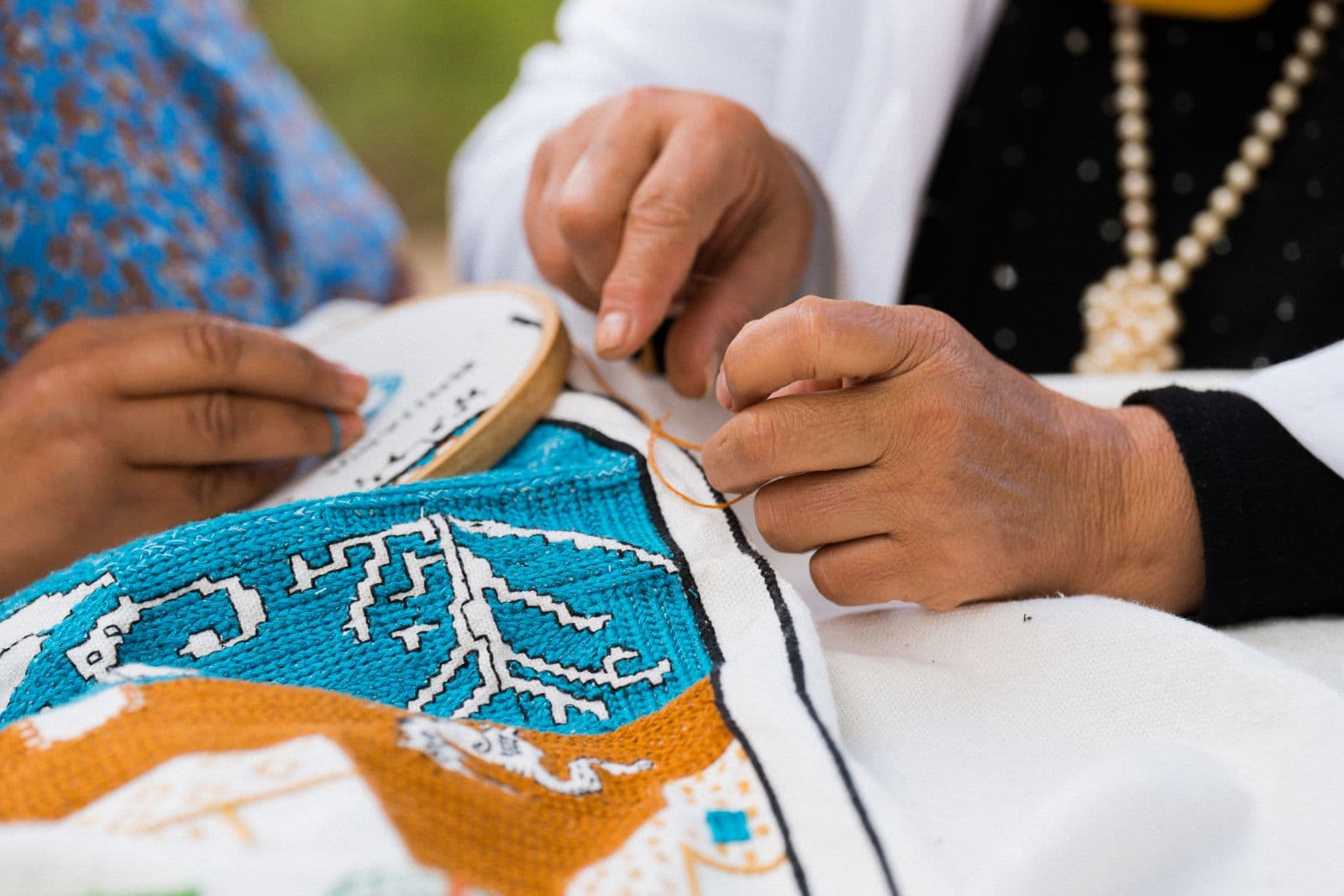
A machine-finished garment is uniform, so one care label covers every unit. A hand-worked piece isn't — the tension of a stitch, the exact fibre content of a thread, even the dye lot can vary slightly from piece to piece. That's not inconsistency; it's the nature of hand work, and it means care instructions here are grouped by fabric and technique rather than reduced to a single generic label.
Dry clean only. Khaddar holds its shape because of how densely it's woven — a home wash can loosen that weave over time. Steam rather than iron directly where there's tonal thread work.
Dry clean only, always. Silk fibres weaken considerably when wet, and raw silk in particular can water-spot permanently. Store on a padded hanger, never folded on a shelf for long periods, to avoid crease lines setting into the fabric.
Hand wash cold, or a gentle machine cycle in a mesh bag. Line dry out of direct sun — direct heat is what fades tonal embroidery threads fastest, not washing itself. Iron on a medium setting, reverse side up, over any hand-worked areas.
Dry clean only, regardless of the base fabric. Metal-thread techniques — tilla, zardozi, dabka, mukaish — can tarnish or catch on a normal wash cycle, and no two embroidered pieces wear identically, so a professional cleaner familiar with hand-work is worth seeking out over a generic dry cleaner where possible.
A loose thread or a hem that's dropped is rarely the end of a piece. Write to us before you set a garment aside — we can often point you to a repair that keeps it wearable for years longer, which is the whole point of making something this way in the first place.