
Worldwide shipping. Duties calculated at checkout.
Every product page on this site names a technique — tilla, zardozi, mukaish — without always explaining what that word means or what it takes to do it well. This page is where that gets answered properly.
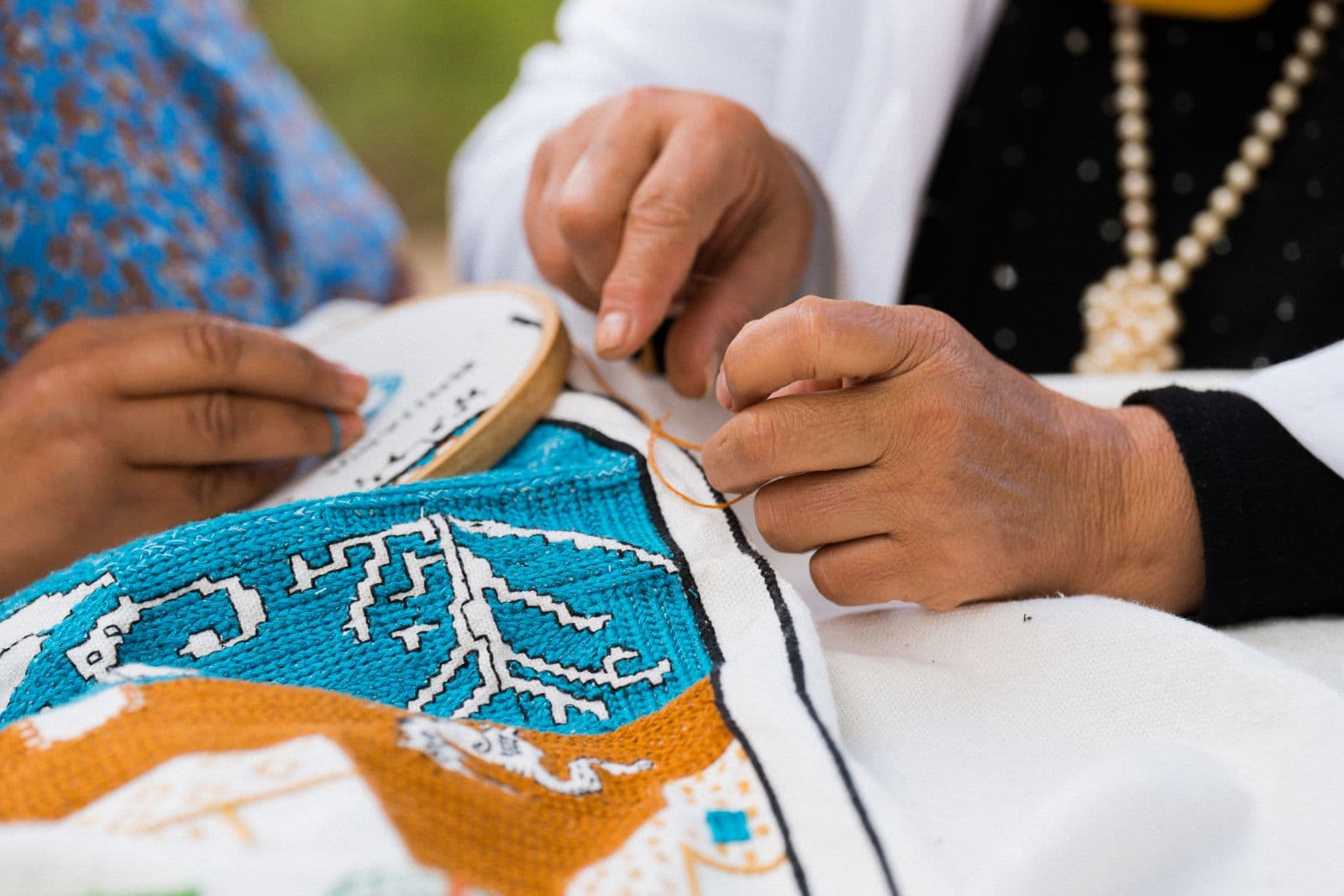
We hold three collections, thirty-six pieces, on purpose. A karigar who works one technique for a decade cannot also produce at the pace a larger catalogue would demand — so every season, we choose the technique first, and let the collection size follow from what that technique can honestly sustain. Every piece is inspected by hand before it ships, because a machine cannot yet tell the difference between deliberate irregularity and a mistake, and hand-work always carries a little of the former.
Metallic thread, traditionally wrapped in gold or silver, couched onto the surface of the fabric in geometric or floral outline. Long associated with Multan, where the region's tilla workers are still trained through direct apprenticeship rather than any formal school.
The heaviest of our techniques — metallic thread and wire embroidery, historically reserved for courtly dress, often built up with sequins or beads until the surface has real weight and dimension. A full zardozi bodice can carry several weeks of work across multiple hands.
Fine coiled metal wire, couched down in continuous lines to create a raised, textured edge — most often used for borders and necklines, where its slight dimensionality reads even at a distance.
Metallic ribbon, folded and applied by hand as edging or appliqué. One of the older techniques we use, and one of the most versatile — a single gota border can shift a plain kurta from everyday to occasion.
Tiny flattened metal wire, pushed through the weave of the fabric by hand to sit as a scatter of small, precise dots. Slow, exacting work — a mukaish dupatta can take longer than embroidery that covers far more surface area, because every single dot is placed on its own.
Cutwork embroidery that removes threads from the base fabric in a deliberate pattern, leaving a lattice the light passes through. Unforgiving of error — a jaali panel that goes wrong can't be unpicked and redone the way surface embroidery can.
A darning-stitch technique with roots across Punjab, traditionally worked in untwisted silk thread on a coarser cotton base in bold, geometric floral motifs. We use it in restrained, tonal form rather than its traditional high-contrast palette, closer to a whisper of the original than a direct copy.
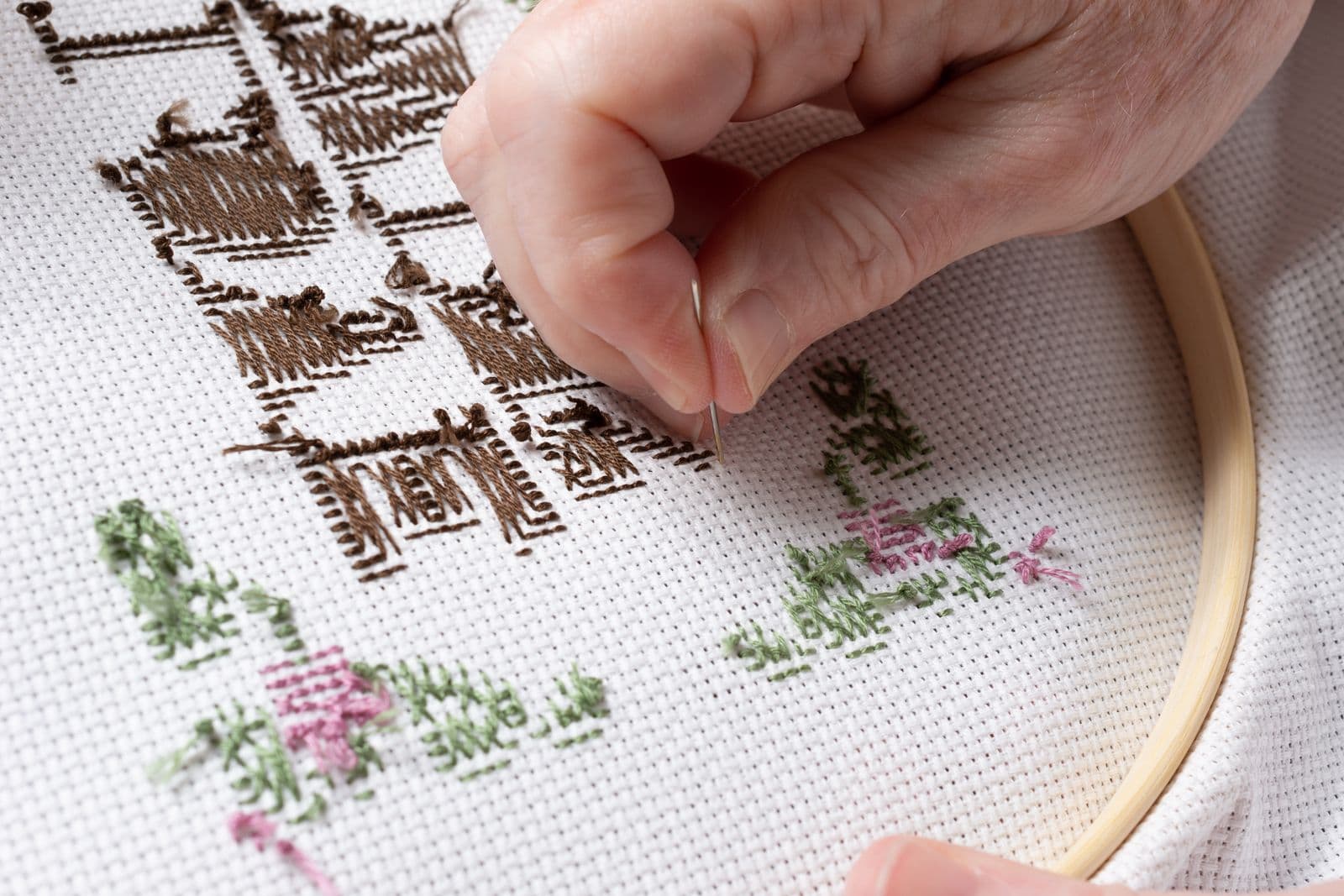
Techniques are chosen to suit the fabric they sit on, not applied regardless of it. Hand-loomed khaddar carries tonal thread work well because its density holds a stitch without distorting; raw silk and silk organza take the finer, lighter techniques — mukaish, delicate zari borders — that would disappear into a heavier weave. Cotton lawn and linen are kept closer to unadorned, letting the weave itself be the texture.
See these techniques on the pieces that carry them in the Collection.